Jakarta - Indonesia’s economic management is akin to a football match, requiring tight coordination and teamwork across institutions, a minister said on Monday, 29 June 2026, as the government navigates complex domestic and global challenges.
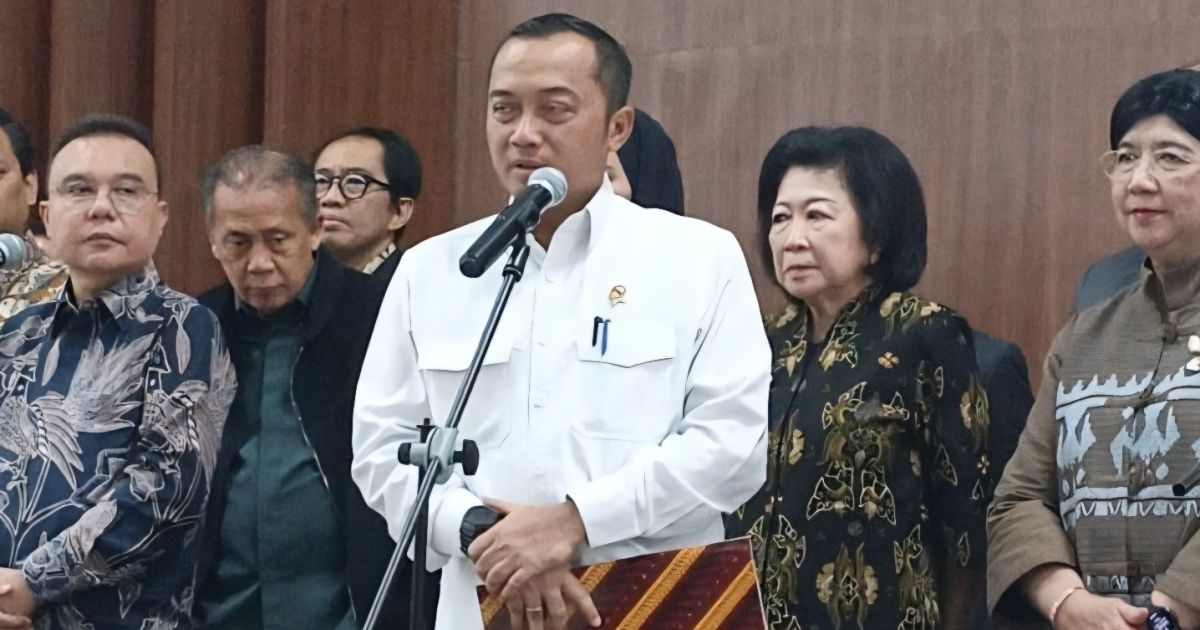
Prasetyo Hadi, Indonesia’s State Secretary Minister, said economic policymaking involves multiple stakeholders — from parliament and the central bank to fiscal authorities and national advisory bodies — each playing a distinct but interconnected role.
“Coordination among economic policymakers continues as usual, and today’s meeting is quite comprehensive as it also includes colleagues from the National Economic Council who are providing insights and recommendations,” the Minister said after a coordination forum with the House of Representatives' members, Central Bank officials, economic experts and related parties in Jakarta.
Drawing on the ongoing World Cup as a metaphor, Prasetyo likened the government’s economic team to a football squad that success depends on cohesion rather than individual performance.
“Managing the economy is like a football team, everyone must coordinate, contribute input, and work together in shaping policies, from macro and fiscal measures to real-sector challenges on the ground,” he explained.
He underscored that, much like in football, no single line of play can determine the outcome. Effective economic strategy, he said, must be built holistically — from upstream planning to downstream implementation.
Prasetyo added that cross-sector coordination is especially critical in addressing pressing issues such as energy supply, which directly affects industrial activity.
“One example is the issue of gas supply for our industries,” he noted.
Indonesia recorded strong economic growth in the first quarter of 2026 at 5.61 percent year-on-year, supported mostly by domestic consumptions - rank third among ASEAN countries after Vietnam and Singapore which recorded 7.83 percent and 6.0 percent respectively.