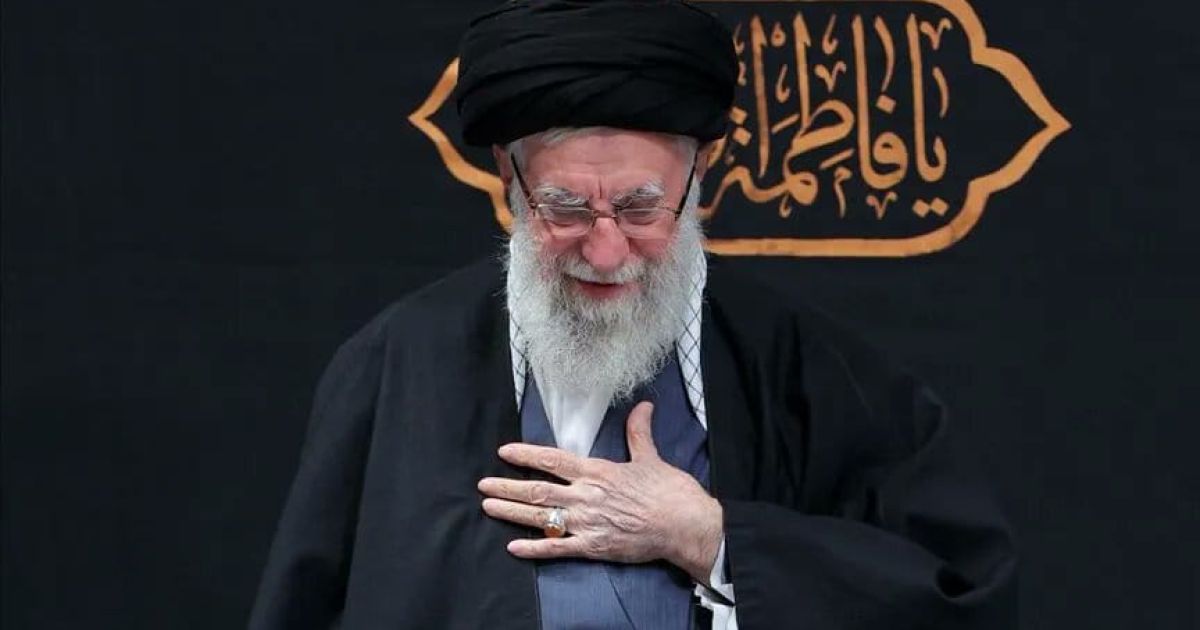
Tehran — Iran will begin a six-day state funeral for slain Supreme Leader Ayatollah Ali Khamenei on 4 July 2026, more than four months after he was killed in a US-Israeli joint airstrike on his Tehran compound, with ceremonies spanning three cities and concluding with his burial in the northeastern holy city of Mashhad on 9 July
Late Khamenei was killed on 28 February 2026, a delay of his state funeral exposed deep fractures in the Islamic Republic's internal stability and raised pointed questions about the visibility of his successor, his son Ayatollah Motjtaba Khamenei.
The 86-year-old cleric, who had led the Islamic Republic for 36 years, was killed on the first day of the US and Israeli strikes against Iran. Islamic law requires burial as soon as possible and ideally within 24 hours of death, but exceptions are permitted in times of war.
Ceremonies in Tehran are scheduled to begin at the Imam Khomeini Mosalla on 4 and 5 of July, followed by a public funeral procession through the city on 6 July, a ceremony in the holy city of Qom on 7 July, processions in the Iraqi cities of Najaf and Karbala on 8 July, and a final burial at the Imam Reza shrine in Mashhad on 9 July.
Officials from more than 30 countries have requested to attend, while religious leaders and scholars from more than 90 countries have expressed their intention to participate. Pakistan's Prime Minister Shehbaz Sharif, who mediated the Iran-US peace negotiations, confirmed his delegation's attendance, as did India's Bihar Governor Lt. Gen. Syed Ata Hasnain and Georgia's President Mikheil Kavelashvili.
Iranian President Masoud Pezeshkian has described Khamenei's killing as a "great crime" and vowed it would not go unanswered.
Iranian Foreign Ministry Spokesperson Esmail Baghaei, speaking ahead of the funeral announcement, said Tehran remained cautious about the pace of negotiations "Although it will not happen tomorrow, the possibility that it could take place in the coming days cannot be ruled out".
The extended period between Khamenei's death and the funeral announcement generated significant public speculation.
Officials provided minimal information about burial timing during the interval, with some critics on social media mockingly asking why the funeral had not yet taken place.
While authorities gave no clear explanation for the delay, security concerns and the risk of an attack on the funeral appear to have been a major factor, particularly given that the funeral of Ali Larijani, secretary of Iran's Supreme National Security Council who was also killed during the war after Khamenei, had already taken place.
A second factor clouding the funeral's scheduling was the condition of Mojtaba Khamenei, Ali's son and designated successor.
Mojtaba survived the February 28 strike but was severely disfigured in the attack and has not been seen in public since his appointment as supreme leader. He lost his wife and children in the attack.
His absence has created a visible problem for the regime: how to hold a state funeral without the new supreme leader visibly presiding over it. Whether Mojtaba will appear at the ceremonies remains unknown, and no audio or video recording of him has been publicly released.
The funeral and burial events fall between 4 and 9 July during Muharram month, a traditional period of mourning in the Shia Muslim calendar — a timing that carries heavy religious symbolism for Iran's Shia majority. That 4 July also marks the 250th anniversary of American independence has not gone unremarked by observers watching Tehran navigate the end of a war fought against Washington.
During his rule, Khamenei built Iran into a powerful anti-US force, spreading its military influence across the West Asia and North Africa through proxy forces including Hezbollah in Lebanon, while using an iron fist to suppress domestic unrest.
Countries that are sending delegations to partake in the funeral ceremonies including Russia, China, Pakistan, India, Turkiye, Turkmenistan, Tajikistan, Iraq, Georgia, Armenia, Afghanistan, Oman, Qatar, Azerbaijan, Kyrgyzstan, Uzbekistan, Bangladesh, Egypt, Kazakhstan, Ghana, Nicaragua, Congo, Serbia, Tunisia, Lebanon, Namibia, Malaysia, Cuba, Sri Lanka, Myanmar, Gambia, and Thailand.***