
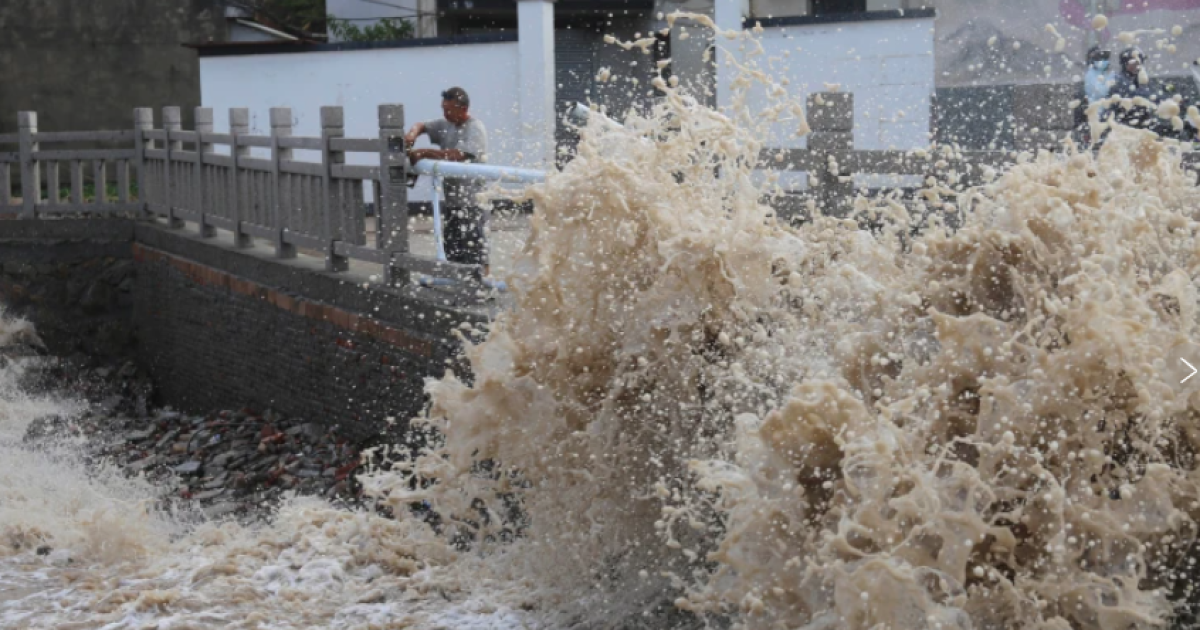
Wenzhou — Typhoon Bavi, the most powerful storm that struck mainland China this year, bringing torrential rains to the eastern coast on Sunday, 12 July 2026 and lashing densely populated cities with strong winds, causing about two million people were evacuated ahead of its arrival.
Bavi made two landfalls in Zhejiang province on Saturday, first striking the coastal city of Yuhuan around 11:20 p.m. local time before hitting Yueqing, part of Wenzhou, around midnight, with winds reaching 144 kph.
The storm had weakened to a tropical storm by Sunday morning as it moved inland, but forecasters warned it could still dump widespread rainfall across eastern and northern China in the coming days.
"Even if the storm weakens after landfall, its large circulation can continue to generate destructive weather hundreds of kilometres inland," said Benjamin Horton, dean of the School of Energy and Environment at the City University of Hong Kong, adding that regions along Bavi's path could see several hundred millimeters of rain within days, raising flood and landslide risks.
Zhejiang authorities relocated 1.72 million residents from vulnerable areas, suspending work, classes, transportation and outdoor activities across the province, according to state media.
In provincial capital Hangzhou, two major train stations halted all services and 327 flights were cancelled at Xiaoshan International Airport.
Neighboring Shanghai cancelled 1,620 train trips and 684 flights, state-backed outlet The Paper reported. No deaths or injuries had been confirmed in mainland China as of Sunday.
Scientists have warned China could face more extreme weather this year as the El Niño pattern strengthens, a shift that can raise temperatures and push typhoon tracks westward toward the Chinese coast.
"Rapid intensification of typhoons reduces preparation time for communities and emergency managers, making these events particularly challenging," Horton said.