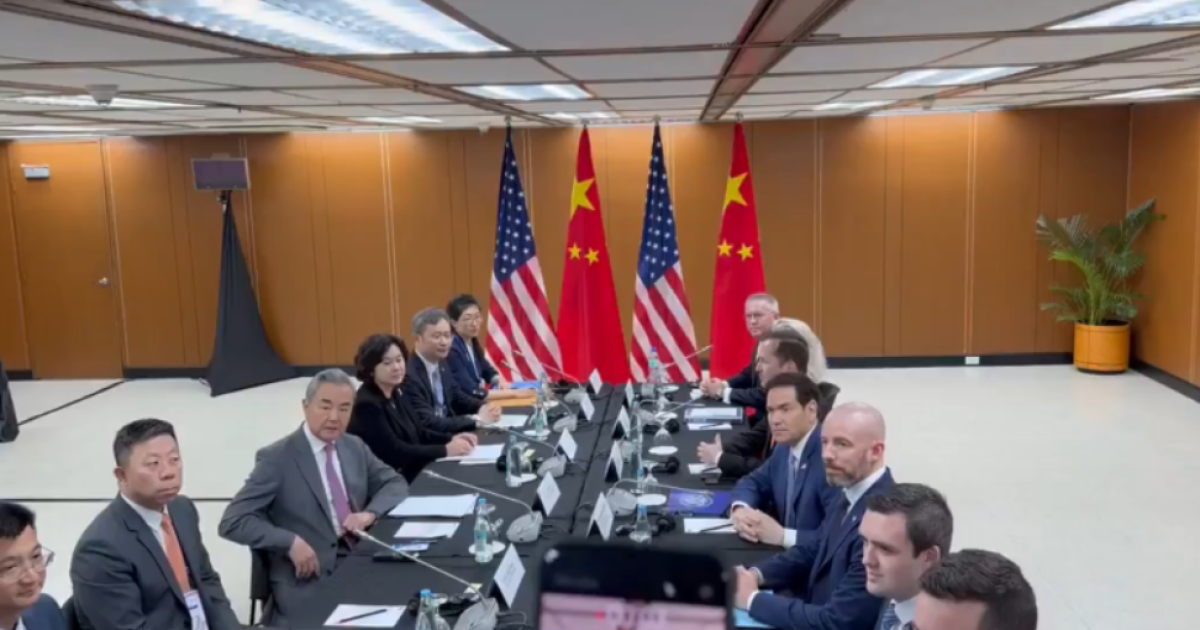
Manila - The United States Secretary of States Marco Rubio on Wednesday, 22 July 2026 met Chinese Foreign Minister Wang Yi during the Association of Southeast Asia Nations' (ASEAN) ministerial meeting in Manila, Philippines, to discuss the concern about recent West Asia hostilities, and tension in South China Sea.
Secretary Marco Rubio is reported has landed in Manila on Tuesday, 21 July 2026, to attend meeting with ASEAN foreign ministers, and will participate in East Asia Summit and a bilateral meeting with QUAD - a sub group that's composed by India, Japan, Australia, and the United States - during his Manila visit.
Meanwhile FM Wang Yi arrived in Manila in Wednesday.
Both ministers' meeting was confirmed previously when Secretary Rubio said about his readiness to open discussion with Chinese Foreign Minister Wang Yi and Russia Foreign Minister Sergey Lavrov during ASEAN gathering in Manila, to assess serious concern about conflicts in the West Asia, especially about it impact to the regional energy sustainability.
"We'd be open to meeting with them. I would never tell you guys in a press conference what we would raise in meetings like that. Those are delicate matters," Secretary Rubio said.
Secretary Rubio's attendance at the ASEAN ministerial meetings come as U.S. would seek to counter China's growing regional influence. US President Donald Trump also has accused Beijing of meddling in US elections.
After US delegation landed in Manila, State Department underscored Washington's focus on the South China Sea, issuing a sharply worded statement that is calling on Beijing to "immediately cease its destabilizing conduct".
Washington slammed Beijing for its “dangerous and aggressive” actions following Philippines sailor has injured in recent clash between Philippines Navy and Chinese Cost Guard. The incident took place on Monday, 20 July 2026 at Second Thomas Shoal, nearly Spratly Island on South China Sea.
Secretary Rubio also response this incident, saying that ASEAN countries were confronting "new and coercive threats" in the South China Sea.