
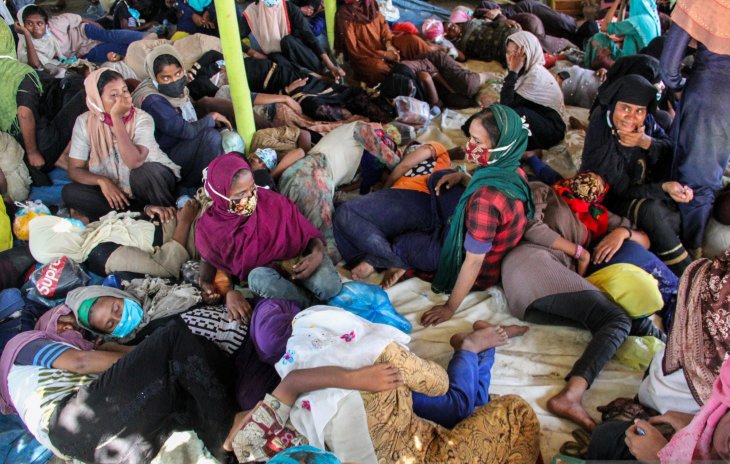
Durian. About 300 Rohingya refugees finally disembarked in the coast of Indonesia’s westernmost province of Aceh on Sept.7 morning after seven months at sea and facing rejection by states from approaching their territories which is a signal of the failure of Bali Process’ implementation, United Nations High Commissioner for Refugees (UNHCR) said.
Indrika Ratwatte, UNHCR director for Asia and the Pacific in a news statement on Sept.7 said that approximately 330 Rohingya refugees have departed from Cox’s Bazar in Bangladesh in February which more than 30 of them estimated to have died in their journey.
From 297 people who arrived in North Aceh regency’s coast on Sept.7 morning, two third of them are women and children.
Ratwatte said some countries in the region collectively have refused those refugees to disembark in the soil for at least six months.
“Their hazardous ordeal has been prolonged by the collective unwillingness of states to act for more than six months. Equally, the Bali Process, as the only existing regional coordination mechanism able to convene states on such maritime movements, has failed to deliver comprehensive, regional action to predictably save lives through rescue and disembarkation,” Ratwatte said in the statement on Sept.7.
“The group had repeatedly tried to disembark over the course of more than 200 days at sea, to no avail,” Ratwatte added.
Currently, UNHCR staffs are working closely with local authorities in Aceh to assess those refugees with immediate priority to provide first aid and medical care. The refugees will be tested for covid-19 according to Indonesia’s health protocol standard.
The refugees were rescued by Indonesian fishermen who helped them to approach the coast safely.
Separately, Usman Hamid, executive director of Amnesty International Indonesia said the arrival of about 300 Rohingya refugees in Aceh coast on Sept.7 showed that they are still willing to risk everything in search for safety.